How to Build a Food Delivery App for Your Business in Riyadh 2026 | Cost, Technology & Competition
 Abd Elrahman Abdallah
·
·
#FoodDeliveryApp #RestaurantApp #FoodOrdering #DeliveryApp #MobileAppDevelopment #Flutter #RestaurantTechnology #Riyadh #SaudiArabia #FoodTech #DigitalTransformation #KheljSoftwareSolutions
Abd Elrahman Abdallah
·
·
#FoodDeliveryApp #RestaurantApp #FoodOrdering #DeliveryApp #MobileAppDevelopment #Flutter #RestaurantTechnology #Riyadh #SaudiArabia #FoodTech #DigitalTransformation #KheljSoftwareSolutions
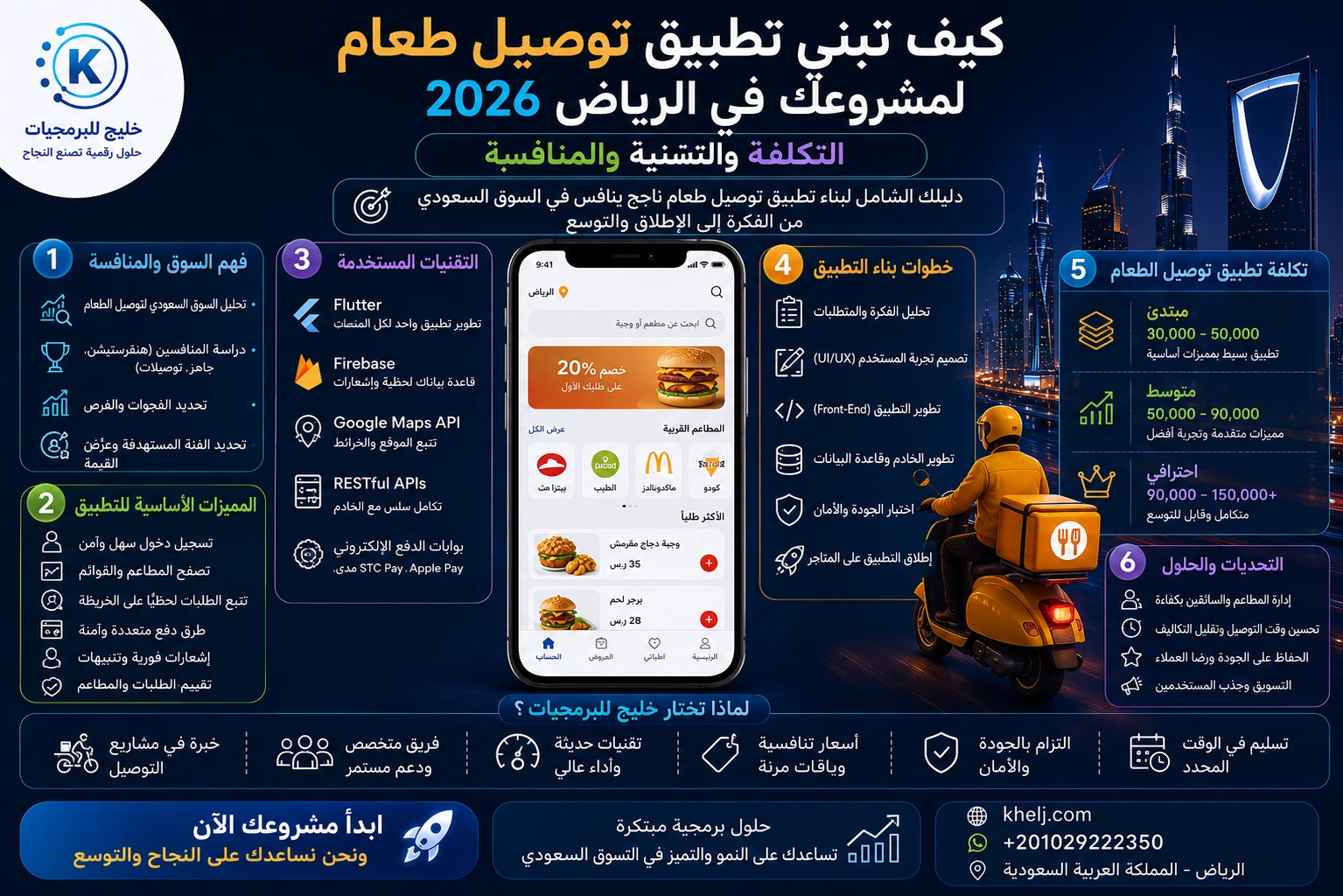
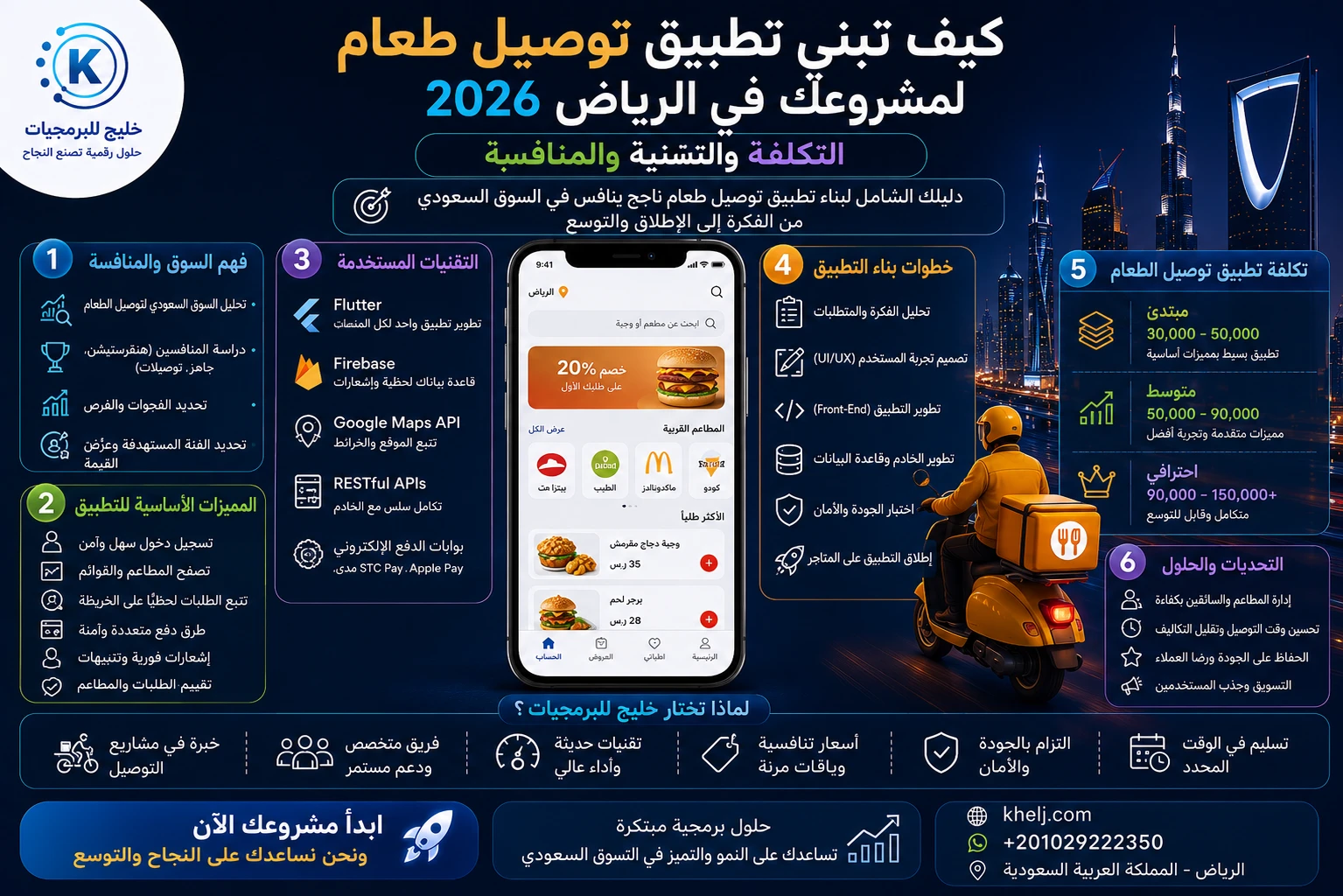
The food delivery industry in Riyadh is a rapidly growing market with tremendous business potential. Owning your own food delivery application can open the door to significant investment opportunities and long-term business growth. However, before launching such a project, it is essential to understand every aspect of building and developing a successful food delivery app—from development costs and the technologies involved to the intense competition within the market.
This comprehensive guide will help you understand the key factors needed to build a successful food delivery application.
Food Delivery App Feasibility Study
Why a Feasibility Study Is Important
No digital project—especially a food delivery application—should begin without conducting a comprehensive feasibility study.
A feasibility study serves as the foundation of your project, determining its long-term viability and sustainability. It provides a complete analysis of the project's financial, operational, technical, and marketing aspects.
Its primary purpose is to help entrepreneurs make informed decisions before investing in application development, minimizing risks while maximizing the chances of success.
Essential Components of a Feasibility Study
A successful food delivery app feasibility study should include several key components.
Market Analysis
Analyze the target market by identifying:
-
Current demand.
-
Existing competitors.
-
Potential competitors.
-
Customer needs in Riyadh.
Financial Planning
Estimate:
-
Food delivery app development costs.
-
Operational expenses.
-
Expected revenues.
-
Profit margins.
-
Return on investment.
Technical Planning
Define the technical requirements, including:
-
Programming technologies.
-
Mobile app architecture.
-
UI/UX design.
-
Backend infrastructure.
-
Cloud services.
-
Security standards.
Legal & Regulatory Compliance
Evaluate all legal and regulatory requirements to ensure compliance with Saudi regulations governing food delivery businesses.
Common Feasibility Study Mistakes
Many entrepreneurs make mistakes during the planning phase that negatively impact project success.
Some of the most common mistakes include:
-
Failing to conduct thorough market research.
-
Underestimating customer demand.
-
Underestimating development costs.
-
Ignoring maintenance and operational expenses.
-
Overlooking competitors.
-
Launching without an effective marketing strategy.
Avoiding these mistakes significantly improves the likelihood of building a successful delivery platform.
Market Analysis for Food Delivery
Identifying Your Target Audience
Identifying your target audience is one of the most critical steps in any food delivery business plan.
Your analysis should include:
-
Age groups.
-
Income levels.
-
Geographic locations.
-
Ordering behavior.
-
Food preferences.
-
Delivery expectations.
Understanding customer needs enables you to design a food delivery application that offers services tailored specifically to their expectations, increasing customer acquisition and retention.
Competitor Analysis
A comprehensive competitor analysis is essential before launching your application.
Study leading food delivery platforms in Riyadh, including companies such as HungerStation and Jahez.
Analyze:
-
Their strengths.
-
Weaknesses.
-
Features.
-
Pricing strategies.
-
User experience.
-
Delivery model.
-
Restaurant partnerships.
This research helps identify market gaps and opportunities that allow your application to stand out from competitors.
Market Opportunities and Challenges
The Riyadh market offers excellent opportunities due to:
-
Rapid growth in online food ordering.
-
Increasing smartphone adoption.
-
Rising demand for convenient delivery services.
-
Expanding digital payment usage.
However, businesses also face challenges such as:
-
Strong competition.
-
High development costs.
-
Complex logistics.
-
Driver management.
-
Maintaining delivery quality.
Successful businesses transform these challenges into competitive advantages through innovation and exceptional customer service.
Steps to Build a Successful Food Delivery App
Planning & Design
Every successful food delivery application begins with careful planning and professional design.
This stage includes:
-
Business analysis.
-
Defining application requirements.
-
Identifying the target audience.
-
Designing an intuitive User Experience (UX).
-
Creating an attractive User Interface (UI).
The entire ordering journey—from browsing restaurants to final delivery—should be simple, fast, and user-friendly.
Proper planning ensures that every essential feature is included before development begins.
Development & Technology
After planning comes the development phase, where the concept becomes a fully functional application.
Choose technologies that support your long-term business objectives.
The project should include:
-
Android Application.
-
iPhone Application.
-
Restaurant Dashboard.
-
Driver Application.
-
Administrative Control Panel.
The technical infrastructure should support:
-
Online ordering.
-
Real-time order tracking.
-
GPS integration.
-
Secure online payments.
-
Push notifications.
-
Customer support.
-
Restaurant management.
A robust architecture ensures scalability, security, and long-term reliability.
Testing & Launch
Before releasing the application, comprehensive testing is essential.
Testing should verify:
-
User registration.
-
Restaurant browsing.
-
Order placement.
-
Payment processing.
-
Live tracking.
-
Driver assignment.
-
Notifications.
-
Overall performance.
Once all tests are completed successfully, launch the application alongside a comprehensive marketing campaign to attract restaurants, drivers, and customers.
Food Delivery App Development Costs
Development & Design Costs
Development and design represent the largest portion of the project budget.
Costs depend on several factors, including:
-
Application complexity.
-
Number of features.
-
Design quality.
-
Development team's experience.
-
Geographic location.
-
Third-party integrations.
Professional UI and UX design are critical investments that directly impact customer satisfaction and business success.
Marketing & Advertising Costs
Developing an excellent application alone isn't enough.
Businesses should allocate a sufficient marketing budget for:
-
Digital advertising.
-
Social media marketing.
-
Public relations.
-
Influencer campaigns.
-
Customer acquisition.
-
Restaurant onboarding.
Building awareness and attracting users requires a well-planned marketing strategy.
Ongoing Maintenance Costs
Beyond the initial development investment, continuous maintenance is essential for long-term success.
Ongoing costs include:
-
Software updates.
-
Technical support.
-
Server hosting.
-
Database management.
-
Security improvements.
-
Performance optimization.
-
Bug fixes.
Regular maintenance ensures application stability while improving customer satisfaction and retention.
Comparing Software Development Companies
Advantages and Disadvantages
When developing a food delivery application, businesses usually choose between outsourcing development to specialized software companies or building an internal development team.
Professional software companies offer:
-
Extensive experience.
-
Specialized development teams.
-
Modern technologies.
-
Proven project management.
-
High-quality software solutions.
However, outsourcing may involve higher initial costs.
Internal teams provide greater control but often require larger long-term investments in hiring and management.
Common Mistakes When Choosing a Development Company
Selecting the wrong software partner can significantly impact project success.
Common mistakes include:
-
Choosing the lowest price without evaluating experience.
-
Failing to review previous projects.
-
Poor communication with the development team.
-
Unclear project requirements.
Businesses should conduct detailed evaluations and request comprehensive proposals outlining development plans, timelines, and deliverables.
Tips for Choosing the Right Company
To select the best software development partner, consider the following:
-
Research companies with proven experience in food delivery applications.
-
Review portfolios and client testimonials.
-
Meet the technical team before signing a contract.
-
Evaluate their development methodology.
-
Ensure transparent pricing.
-
Confirm project timelines.
-
Understand post-launch support services.
Choosing the right technology partner is one of the most important decisions you'll make throughout the project.
Conclusion
Why Choosing the Right Development Company Matters
Selecting the right software company is a critical factor in the success of your food delivery business.
Building a delivery platform is not merely a technical task—it is a strategic investment that requires deep market knowledge, accurate budgeting, and outstanding technical expertise.
The right partner will help you build a reliable application that delivers an exceptional customer experience while achieving sustainable business growth in Riyadh's competitive market.
About Khelj Software Solutions
Among the companies specializing in software development, Khelj Software Solutions stands out as a reliable technology partner.
The company provides comprehensive software solutions across multiple industries and possesses extensive experience in designing and developing food delivery applications.
Its expertise enables businesses to build scalable, innovative, and high-performance delivery platforms tailored to the Saudi market.
Keys to Success
Building a successful food delivery application requires:
-
Conducting a comprehensive feasibility study.
-
Performing detailed market analysis.
-
Identifying the right target audience.
-
Designing an exceptional user experience.
-
Choosing modern technologies.
-
Investing in ongoing development and maintenance.
-
Implementing effective marketing strategies.
Businesses that continuously innovate, focus on customer satisfaction, and partner with experienced software development companies will be well-positioned to succeed in Saudi Arabia's rapidly expanding food delivery industry.