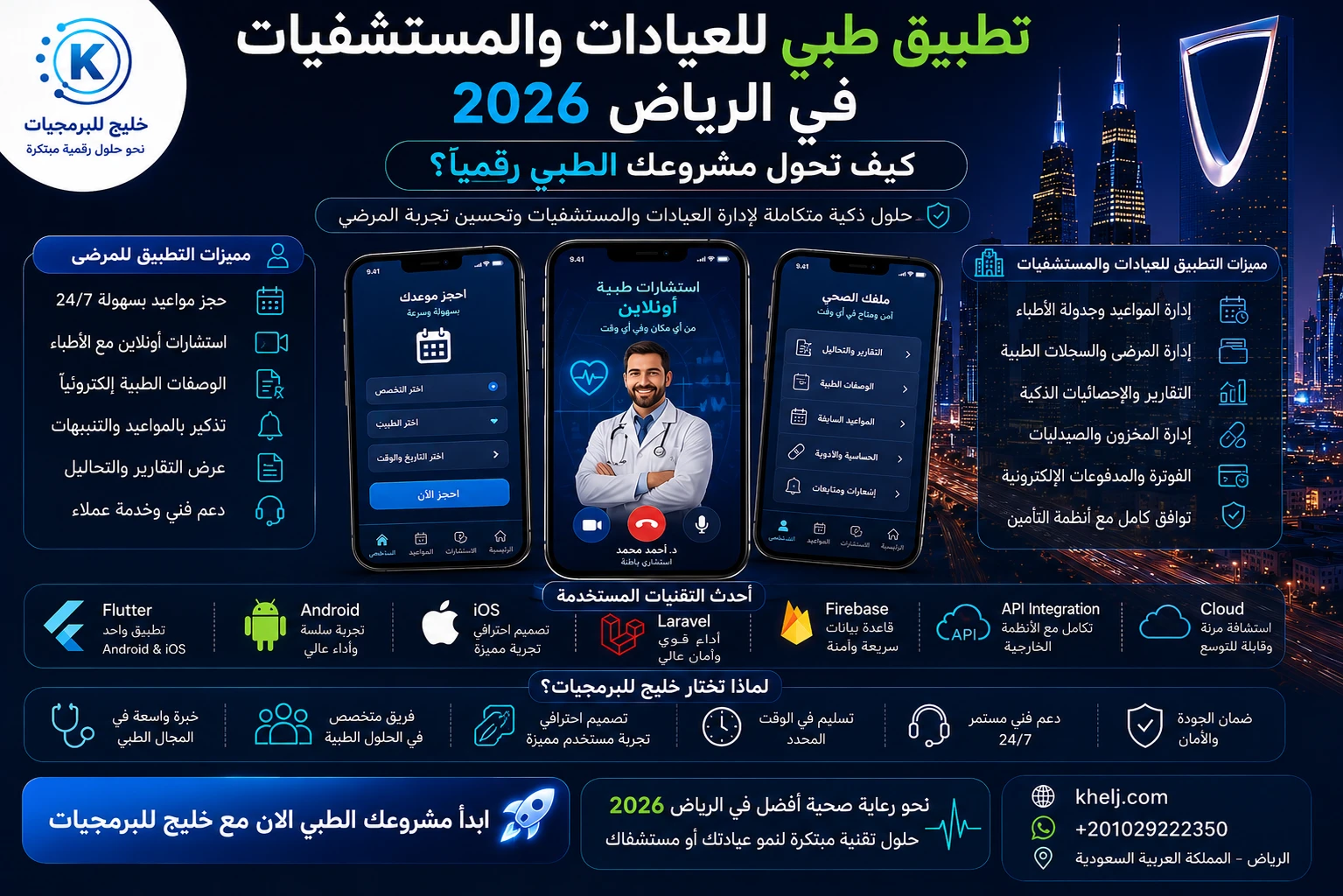
Medical App for Clinics & Hospitals in Riyadh 2026 | How to Digitally Transform Your Healthcare Business
 Abd Elrahman Abdallah
·
·
#MedicalApp #HealthcareApp #ClinicManagement #HospitalManagement #Telemedicine #AppointmentBooking #HealthcareTechnology #DigitalHealth #AppDevelopment #Riyadh #SaudiArabia #KheljSoftwareSolutions
Abd Elrahman Abdallah
·
·
#MedicalApp #HealthcareApp #ClinicManagement #HospitalManagement #Telemedicine #AppointmentBooking #HealthcareTechnology #DigitalHealth #AppDevelopment #Riyadh #SaudiArabia #KheljSoftwareSolutions
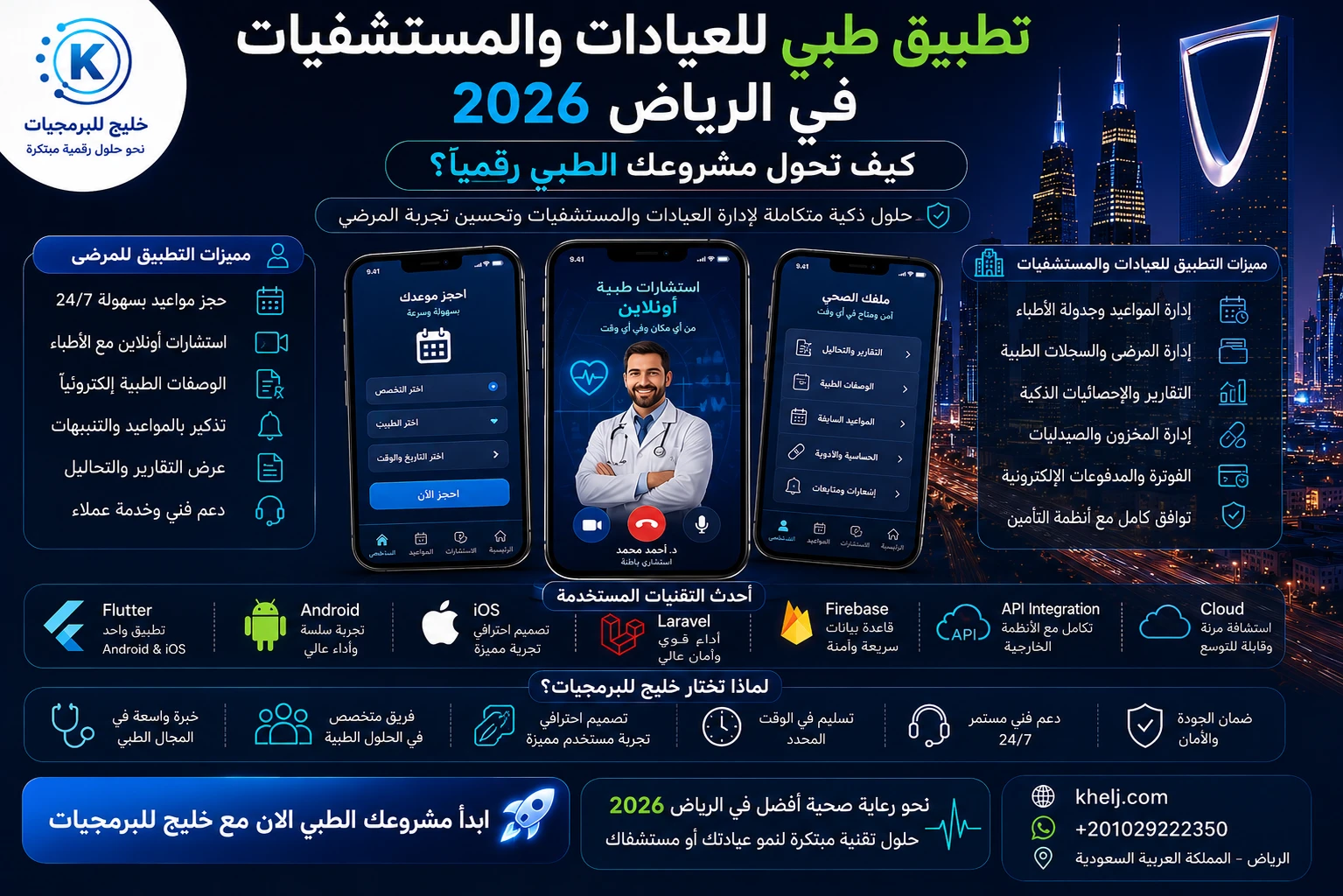
Medical App for Clinics & Hospitals in Riyadh 2026 | How to Digitally Transform Your Healthcare Business
Saudi Arabia's healthcare sector is undergoing an unprecedented digital transformation, driven by the ambitious goals of Saudi Vision 2030. Digital transformation is no longer a luxury—it has become a necessity for ensuring the sustainability and competitiveness of healthcare organizations while delivering high-quality medical services that meet the expectations of both patients and healthcare providers.
Its importance is reflected in several key areas:
-
Ensuring the sustainability and competitiveness of healthcare businesses.
-
Delivering high-quality healthcare services.
-
Enhancing operational efficiency and patient satisfaction.
This article explores how hospitals and clinics can adopt modern technologies to shape the future of healthcare.
Introduction to Healthcare Digital Transformation
The Importance of Digital Transformation in Saudi Healthcare
Digital transformation has become one of the fundamental pillars of Saudi Arabia's healthcare strategy under Vision 2030, which aims to modernize the healthcare ecosystem and improve quality of life.
Healthcare organizations—including hospitals, clinics, and medical centers—can benefit from digital transformation by:
-
Improving operational efficiency.
-
Reducing operational costs.
-
Enhancing patient experiences.
-
Increasing access to healthcare services.
Launching a comprehensive medical application enables patients to access healthcare services more easily, manage appointments, receive virtual consultations, and communicate efficiently with healthcare providers.
Digital healthcare also reduces pressure on traditional healthcare facilities while creating a more sustainable and efficient healthcare system across the Kingdom.
Modern Technologies and Their Role in Healthcare
Modern technologies play a transformative role in improving healthcare services and shaping the future healthcare model in Saudi Arabia.
Through advanced medical applications, hospitals and healthcare centers can leverage technologies such as:
-
Artificial Intelligence (AI)
-
Big Data Analytics
-
Machine Learning
-
Cloud Computing
-
Telemedicine
These technologies improve diagnostic accuracy, enable remote monitoring of chronic diseases, facilitate communication between doctors and patients, and enhance clinical decision-making.
Innovation in healthcare technology significantly improves the overall quality of medical services while providing patients with smarter and more convenient access to healthcare.
This aligns with the Saudi Ministry of Health's strategy of creating a more efficient, connected, and patient-centered healthcare ecosystem.
The Future Healthcare Model
The future of healthcare in Saudi Arabia is built on innovation and digital transformation, placing patients at the center of care delivery.
By implementing an integrated medical application, healthcare providers can fully embrace digital healthcare through:
-
Online appointment booking
-
Virtual medical consultations
-
Continuous patient monitoring
-
Personalized healthcare services
-
Electronic medical records
-
Digital prescriptions
This model enhances healthcare quality, reduces waiting times, improves access to specialists, and creates a seamless patient experience while supporting the goals of Saudi Vision 2030.
Designing a Medical App for Clinics and Hospitals
Success Factors in Medical App Design
Building a successful healthcare application requires careful attention to several critical factors.
A medical application should prioritize:
-
Ease of use.
-
Secure handling of sensitive patient information.
-
Compliance with healthcare regulations.
-
Integration with existing Hospital Information Systems (HIS).
-
Scalability for future expansion.
Integration with Electronic Medical Record (EMR) systems plays a crucial role in increasing operational efficiency while minimizing human errors.
Furthermore, applications should remain adaptable to future technological advancements and evolving healthcare needs to ensure long-term success.
The Importance of User Experience
User Experience (UX) is one of the most important factors determining the success of any healthcare application.
A medical application should provide:
-
Intuitive navigation.
-
Simple appointment booking.
-
Easy access to medical reports.
-
Smooth virtual consultation experiences.
-
Fast access to patient records.
An excellent user experience improves patient satisfaction, reduces operational complexity, and increases confidence in digital healthcare services.
Well-designed interfaces encourage greater adoption of digital healthcare solutions among both patients and medical professionals.
Examples of Successful Healthcare Applications
Many successful healthcare applications have transformed the delivery of medical services worldwide.
Common features include:
-
Online appointment scheduling.
-
Remote patient consultations.
-
Chronic disease management.
-
Secure patient communication.
-
Electronic prescriptions.
-
Health record management.
These applications demonstrate how technology can improve accessibility, convenience, and healthcare outcomes while supporting digital transformation initiatives.
Comparing Software Development Companies in Saudi Arabia
Advantages and Disadvantages of Different Companies
Saudi Arabia has many software development companies offering healthcare solutions.
Large companies often provide:
-
Comprehensive digital transformation services.
-
Experienced multidisciplinary teams.
-
Enterprise-level healthcare solutions.
-
Advanced AI and cloud technologies.
However, they may involve:
-
Higher development costs.
-
Longer implementation timelines.
-
More complex approval processes.
Smaller companies tend to offer greater flexibility and innovation but may lack experience managing large-scale healthcare projects.
Healthcare organizations should evaluate both technical expertise and healthcare industry experience before selecting a development partner.
Common Mistakes When Choosing a Development Company
Many healthcare organizations make avoidable mistakes when selecting a software development company.
Common mistakes include:
-
Choosing solely based on price.
-
Ignoring healthcare industry experience.
-
Failing to define project requirements clearly.
-
Overlooking post-launch maintenance.
-
Neglecting cybersecurity capabilities.
Without ongoing technical support and maintenance, medical applications may encounter operational issues that negatively impact patient care and business continuity.
Practical Tips for Choosing the Right Company
When selecting a healthcare software development company, organizations should consider the following:
-
Choose companies with extensive healthcare industry experience.
-
Review previous healthcare application projects.
-
Verify post-launch maintenance and support services.
-
Ensure compliance with Saudi Vision 2030 digital transformation objectives.
-
Assess cybersecurity and data privacy standards.
-
Select a company capable of adapting to future healthcare technologies.
The ideal technology partner should combine technical excellence with a deep understanding of healthcare workflows and regulatory requirements.
Khelj Software: A Digital Healthcare Success Story
About Khelj Software
Khelj Software is one of Saudi Arabia's leading software development companies, delivering innovative healthcare technology solutions tailored to clinics, hospitals, and medical organizations.
The company specializes in:
-
Medical application development.
-
Hospital management systems.
-
Clinic management platforms.
-
Healthcare digital transformation.
-
Patient management systems.
-
Telemedicine platforms.
By leveraging modern technologies and industry best practices, Khelj Software develops secure, scalable, and user-friendly healthcare solutions.
Successful Healthcare Projects
Khelj Software has successfully delivered numerous healthcare projects across Saudi Arabia.
Its solutions have helped healthcare organizations:
-
Improve patient experiences.
-
Simplify appointment scheduling.
-
Expand telemedicine services.
-
Streamline hospital operations.
-
Reduce administrative workloads.
-
Increase operational efficiency.
These achievements demonstrate the company's ability to transform healthcare organizations through innovative digital solutions.
Lessons Learned
Years of experience in healthcare software development have enabled Khelj Software to identify several key success factors:
-
Maintaining transparent communication with clients.
-
Understanding healthcare workflows before development.
-
Conducting detailed business analysis.
-
Prioritizing patient experience.
-
Building secure and scalable applications.
-
Providing continuous technical support.
These principles enable the company to consistently deliver high-quality healthcare applications that support Saudi Arabia's digital healthcare vision.
Conclusion: The Future of Healthcare with Khelj Software
The future of healthcare in Saudi Arabia is driven by innovation, artificial intelligence, digital transformation, and patient-centered care.
Healthcare organizations will increasingly rely on integrated digital platforms to:
-
Improve patient outcomes.
-
Expand remote healthcare services.
-
Manage chronic diseases more effectively.
-
Enhance operational efficiency.
-
Deliver personalized healthcare experiences.
With trusted technology partners like Khelj Software, clinics and hospitals can confidently embrace digital transformation and build modern healthcare ecosystems aligned with Saudi Vision 2030.
Investing in a professional medical application today is not only a technological upgrade—it is a strategic investment in the future of healthcare.