Mobile Applications in Makkah 2026 | Market Opportunities in the City of Pilgrims and Visitors
 Abd Elrahman Abdallah
·
·
#Makkah #MobileApps #Hajj #Umrah #ReligiousTourism #AppDevelopment #MobileDevelopment #DigitalTransformation #Pilgrims #Visitors #SaudiArabia #Vision2030 #SoftwareDevelopment #HajjApps #UmrahApps
Abd Elrahman Abdallah
·
·
#Makkah #MobileApps #Hajj #Umrah #ReligiousTourism #AppDevelopment #MobileDevelopment #DigitalTransformation #Pilgrims #Visitors #SaudiArabia #Vision2030 #SoftwareDevelopment #HajjApps #UmrahApps
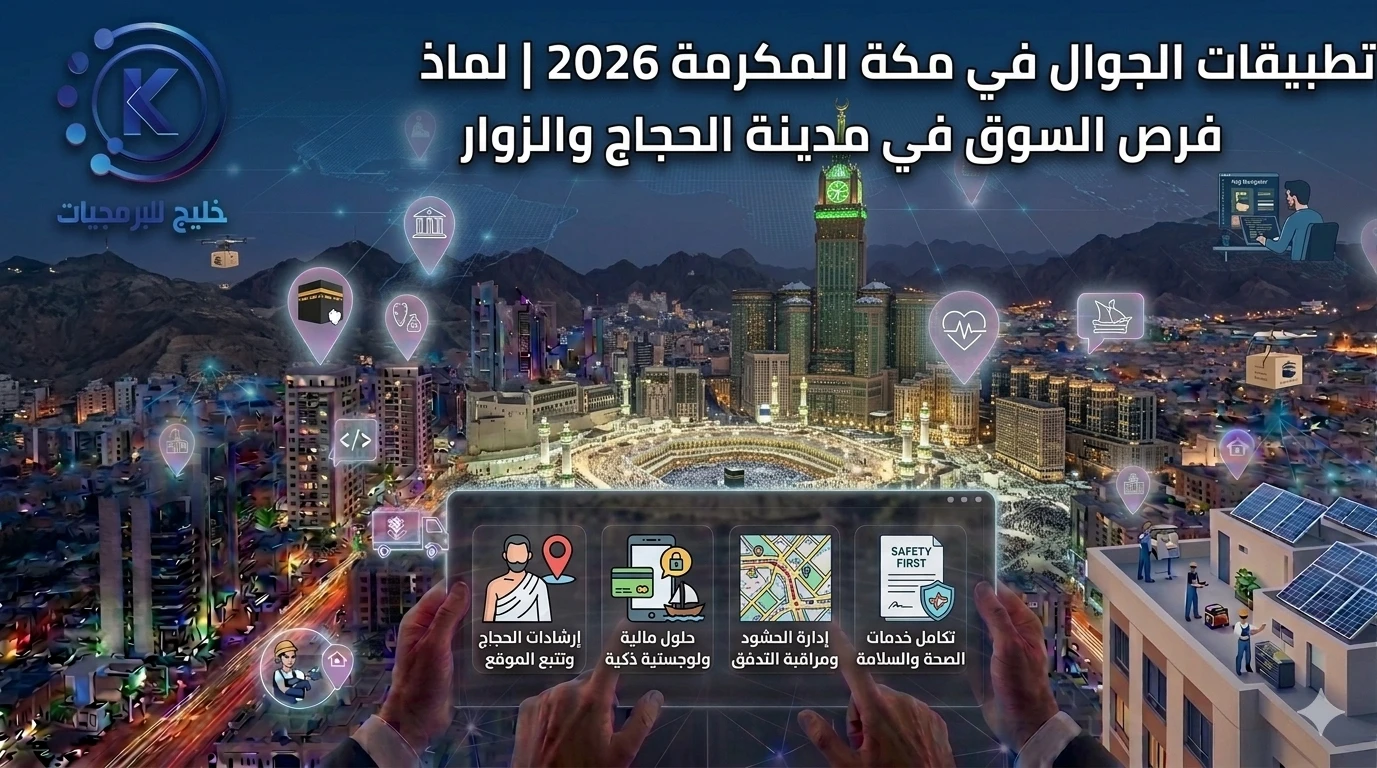
Makkah is the heart of the Islamic world and the destination of millions of pilgrims and Umrah performers every year, making it a fertile environment for investment in digital technologies and mobile application development. In this article, we explore key aspects of mobile applications in Makkah, including:
-
The growing importance of mobile applications.
-
Market expectations and opportunities by 2026.
-
Their vital role in facilitating the pilgrimage journey and supporting the performance of religious rituals.
Introduction
The Importance of Digital Applications in Makkah
With the rapid pace of technological advancement, digital applications have become essential in Makkah, serving millions of pilgrims and visitors from around the world. These applications provide innovative solutions that simplify every stage of the Hajj and Umrah journey, helping users with:
-
Trip planning and preparation.
-
Easy access to guidance for performing rituals.
-
Navigation and transportation services.
-
Communication and support throughout their journey.
Integrating modern technologies into services for pilgrims enhances service quality and ensures a smoother and more comfortable experience.
Market Expectations for 2026
The mobile application market in Makkah is expected to experience significant growth by 2026, driven by increasing numbers of pilgrims and visitors, as well as Saudi Arabia’s ongoing digital transformation initiatives.
This growth will create substantial opportunities for developing innovative applications that offer integrated services, including:
-
Interactive maps of holy sites.
-
Prayer time and religious guidance applications.
-
Smart crowd management solutions.
-
Transportation and navigation services.
-
Digital assistance platforms for pilgrims.
These applications will become an integral part of the pilgrimage experience, significantly expanding market opportunities for businesses and developers.
The Role of Applications in Facilitating Religious Rituals
Mobile applications play a critical role in helping pilgrims perform their religious duties efficiently and correctly. They provide accurate and up-to-date information about Hajj and Umrah rituals, helping users understand and follow each step properly.
Through these applications, pilgrims can:
-
Locate important sites within the Holy Mosque and sacred areas.
-
Access medical and guidance services.
-
Receive real-time updates and notifications.
-
Stay connected with family and travel groups.
As a result, digital solutions significantly improve the overall pilgrimage experience.
Types of Applications Available in Makkah
Hajj and Umrah Applications
Hajj and Umrah applications represent one of the most important categories of mobile apps in Makkah. These platforms provide comprehensive digital services designed specifically for pilgrims.
Key features often include:
-
Step-by-step ritual guidance.
-
Interactive maps of holy sites.
-
Prayer times and religious resources.
-
Multilingual support.
-
Emergency and support services.
These applications help ensure a smooth and convenient pilgrimage journey while enhancing the overall quality of services provided to visitors.
Tourism and Hospitality Applications
Beyond pilgrimage-focused platforms, tourism applications play an important role in supporting visitors throughout their stay in Makkah and Madinah.
These applications commonly offer:
-
Hotel reservations.
-
Restaurant recommendations.
-
Transportation booking services.
-
Tourist and historical site information.
-
Guided tours and visitor experiences.
Such solutions contribute to strengthening religious tourism while supporting Saudi Arabia’s broader tourism development goals.
Other Digital Service Applications
The digital ecosystem in Makkah extends far beyond pilgrimage and tourism services.
Additional application categories include:
-
Smart transportation services.
-
E-commerce platforms.
-
Food delivery applications.
-
Healthcare services.
-
Educational platforms.
These applications support Saudi Arabia’s digital transformation initiatives while improving convenience and quality of life for both residents and visitors.
Analysis of Software Development Companies
Advantages of Local Development Companies
Local software companies in Makkah offer several competitive advantages.
They possess:
-
Deep understanding of religious and cultural requirements.
-
Strong awareness of pilgrims’ unique needs.
-
Fast and responsive local support.
-
Greater flexibility for updates and customizations.
This local expertise enables them to build solutions specifically tailored to the pilgrimage experience.
Challenges Faced by Some Companies
Despite their advantages, some development companies face challenges that may impact project quality.
Common issues include:
-
Limited experience with large-scale projects.
-
Use of outdated technologies.
-
Insufficient understanding of customer requirements.
-
Weak communication during development cycles.
These factors can negatively affect application performance and user satisfaction.
Common Mistakes When Choosing a Development Company
Businesses and investors often make several mistakes when selecting software partners.
Typical mistakes include:
-
Focusing only on price rather than quality.
-
Ignoring previous project experience.
-
Failing to review client testimonials.
-
Choosing providers without pilgrimage-sector expertise.
Avoiding these mistakes is essential for ensuring successful project outcomes.
Future Market Opportunities
Innovation Trends in Mobile Applications
The future of mobile applications in Makkah is closely tied to innovation.
Emerging technologies expected to shape the market include:
-
Artificial Intelligence (AI).
-
Augmented Reality (AR).
-
Virtual Reality (VR).
-
Smart navigation systems.
-
Real-time crowd management platforms.
These technologies will transform the way pilgrims interact with services and perform religious rituals.
Visitor Needs and Challenges
As the number of pilgrims continues to increase toward 2026, several needs and challenges will require advanced digital solutions.
Visitors increasingly need:
-
Accurate prayer and ritual information.
-
Easy navigation tools.
-
Instant language translation services.
-
Emergency assistance.
-
Efficient transportation guidance.
Addressing these needs will create significant opportunities for innovative mobile applications.
Strategies for Success in the Market
Companies seeking success in Makkah’s mobile app market should focus on:
-
Developing multilingual applications.
-
Providing personalized user experiences.
-
Offering 24/7 support services.
-
Integrating with government platforms.
-
Building strong partnerships within the Hajj and Umrah ecosystem.
A strong emphasis on quality and innovation will be essential for long-term success.
Practical Advice for Investors
Evaluating Software Development Companies
Investors should carefully evaluate development companies before launching digital projects.
Important evaluation criteria include:
-
Experience in Hajj and Umrah applications.
-
Technical expertise.
-
Portfolio quality.
-
Customer reviews.
-
Post-launch support capabilities.
Choosing the right technology partner is one of the most critical factors in project success.
Understanding User Needs
Successful applications are built around a deep understanding of user requirements.
Developers and investors should conduct extensive research to identify challenges faced by pilgrims and visitors, including:
-
Navigation difficulties.
-
Access to accurate information.
-
Language barriers.
-
Transportation and accommodation needs.
Applications that effectively address these challenges are more likely to achieve widespread adoption.
Learning from Successful Market Examples
Studying successful applications already serving pilgrims and visitors can provide valuable insights.
Common success factors include:
-
Simple and intuitive interfaces.
-
Reliable functionality.
-
Multilingual accessibility.
-
Accurate location services.
-
Strong customer support.
These examples can guide the development of future applications and improve their chances of market success.
Conclusion
Evaluating Gulf Software Company
When examining software development providers specializing in pilgrimage-related applications, Gulf Software Company serves as an example of a business focused on delivering quality digital solutions.
Its emphasis on understanding industry-specific requirements, maintaining technical excellence, and providing ongoing support highlights important qualities that investors should look for when selecting development partners.
Future Vision for Makkah Applications
The future of mobile applications in Makkah points toward deeper integration of advanced technologies and smarter digital services.
By 2026, mobile applications are expected to become central to the entire pilgrimage journey, offering:
-
AI-powered assistance.
-
Advanced navigation systems.
-
Real-time service recommendations.
-
Enhanced crowd management capabilities.
These innovations will support Saudi Arabia’s vision of creating a smarter and more efficient pilgrimage experience.
A Call to Invest in Digital Applications
With growing numbers of pilgrims and visitors and the Kingdom’s commitment to digital transformation, Makkah presents significant opportunities for investment in mobile applications.
Developing innovative digital solutions for Hajj, Umrah, and religious tourism is not only a promising business opportunity but also a meaningful contribution to improving services for millions of visitors and supporting Saudi Vision 2030.